

Traffic protection plans, traffic control devices and directing traffic under O. Reg. 213/91 and OTM Book 7
Description
Workers on roadway projects face one of the most serious hazards in construction: being struck by vehicles that have nothing to do with the job. A well-planned and properly set-up traffic control zone protects workers, motorists and pedestrians.
This course gives an overview of the Ontario legislation that governs traffic control on construction projects, and teaches participants how to develop an effective traffic protection plan and how to identify and control hazards related to road construction. It is designed for anyone involved in planning, communicating or implementing traffic control on a construction site, including traffic control persons (TCPs), supervisors and planners.
The following list covers the course modules:
- Ontario Regulation 213/91 (Construction Projects), sections 67 to 69.1
- Developing and implementing a written traffic protection plan
- Identifying and controlling vehicular traffic hazards
- Barriers, barricades, delineators, lane control devices, warning signs and flashing lights
- Blocker trucks, crash trucks, sign trucks and longitudinal buffer areas
- Planning concepts for road layout, road conditions and appropriate speeds
- Setting up and removing traffic control devices safely
- Directing traffic: STOP/SLOW sign requirements, signals and positioning
- When a worker may not direct traffic: more than one lane in the same direction, or posted speeds over 90 km/h
- Adequate written and oral instructions, in a language the worker understands
- High-visibility garment requirements, including night-time requirements
- Ontario Traffic Manual (OTM) Book 7: Temporary Conditions
Participants must bring the Ontario Traffic Manual, Book 7: Temporary Conditions (April 2022 edition, field or office edition). It is required in class but not provided.
Delivery: Available in person or online.
Course length: 4 hours | Class size: up to 12 students. Minimum class size required.
Related products
-
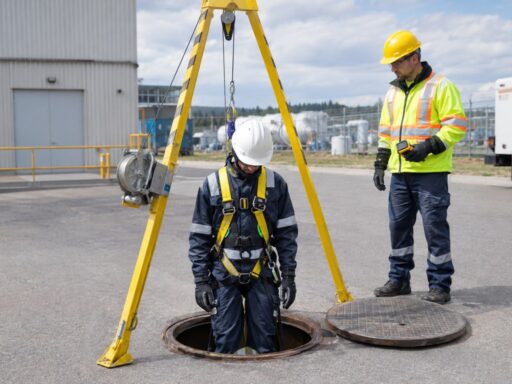
Confined Space Entry & Attendant
Confined Space Entry & Attendant
Hands-on entrant and attendant training: gas monitors, ventilation, harnesses and tripod/winch retrieval
-

Working at Heights
Working at Heights
CPO-approved Working at Heights: fall protection legislation, equipment, ladders, scaffolds, guardrails, rescue planning and hands-on practical
-

SHSM Communicable Disease Control
SHSM Communicable Disease Control
Communicable Disease and Infection Control Principles
-
Musculoskeletal Disorder Awareness
Musculoskeletal Disorder Awareness
Recognizing, reporting and preventing sprains, strains and repetitive strain injuries