

Description
Recognizing, assessing and controlling (or eliminating) workplace hazards is a specialized form of problem solving. It involves anticipating hazards and taking action before anyone is hurt. It is the foundation of incident prevention, risk management and due diligence under the Occupational Health and Safety Act.
This course combines the legal side of documenting hazard assessments with a practical, collaborative approach that builds a strong safety culture, using a system developed by Barantas Inc. It is suited to supervisors, managers, joint health and safety committee members and workers who take part in hazard assessments.
The following list covers the course modules:
- Hazards versus risk: what the difference is and why it matters
- Types of hazards: physical, chemical, biological, ergonomic and psychosocial
- The role of hazard assessments, including field level hazard assessments (FLHAs) and job hazard analysis
- Methods for performing a risk analysis: rating severity and likelihood with a risk matrix
- Identifying common precursors to incidents (“what if” scenarios)
- Prevention strategies at the root cause level
- The hierarchy of controls: elimination, substitution, engineering controls, administrative controls and personal protective equipment
- Where to place controls: at the source, along the path and at the worker
- Checking that controls are working, and reviewing assessments when conditions change
- Documenting hazard assessments to show due diligence
- Communicating hazards and controls to workers
- Employer, supervisor and worker responsibilities
Course length: 4 hours | Class size: up to 12 students. Minimum class size required.
Related products
-
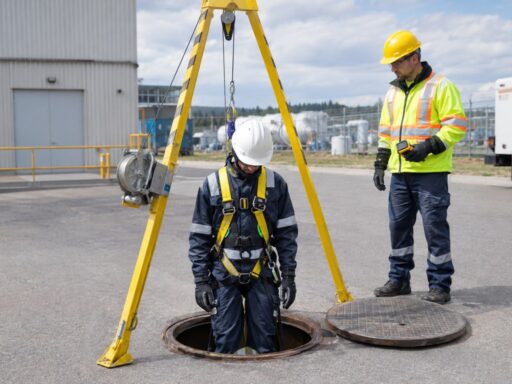
Confined Space Entry & Attendant
Confined Space Entry & Attendant
Hands-on entrant and attendant training: gas monitors, ventilation, harnesses and tripod/winch retrieval
-

Violence & Harassment Awareness
Violence & Harassment Awareness
Recognizing, preventing and reporting workplace violence and harassment, including virtual harassment
-
Workplace First Aid & CPR – Outside Ontario (CSA Z1210)
Workplace First Aid & CPR – Outside Ontario (CSA Z1210)
Workplace First Aid & CPR
-

Working at Heights
Working at Heights
CPO-approved Working at Heights: fall protection legislation, equipment, ladders, scaffolds, guardrails, rescue planning and hands-on practical